


When is a Pokémon card worth grading?
Not every Pokémon card is suitable for grading. Although more and more collectors choose to have their cards professionally graded by PSA, Beckett, or CGC, grading does not automatically result in a better or more valuable card. Condition, rarity, popularity, and personal significance all play an important role.
When is it then a good idea to have a Pokémon card graded? In this guide, we explain what to look for before sending in a card. This will help you avoid unnecessary costs and give you a better idea of which cards are most likely to receive a high grade.
Are you new to the world of grading? Then read our comprehensive guide Graded Pokémon cards explained, in which we explain step by step how grading works and what the differences are between PSA, Beckett, and CGC.
There is no simple rule
Many new collectors wonder whether a particular Pokémon card is "worth grading". Unfortunately, there is no simple answer. Two identical cards can receive very different grades after grading, depending on their condition.
A rare card with a lot of damage will often receive a lower grade, while a modern card in perfect condition may receive a very high grade. That is why it is important to look not only at the card's value, but especially at the overall combination of rarity, condition, and collectibility.
1. Is the card rare?
The first question you can ask yourself is how rare the card actually is. In general, cards that are difficult to find again or hold a special place in the history of the Pokémon TCG are the ones most likely to be graded.
For example:
- Gold Star Pokémon cards.
- Crystal Pokémon cards.
- Shining Pokémon cards.
- Illustration Rares and Special Illustration Rares.
- Old promotional cards.
- Vintage holographic cards.
- Limited-edition cards.
The rarer a card is, the more appealing a professional condition assessment often is to collectors.
2. Is the condition exceptionally good?
Condition ultimately determines what grade a card receives. Grading companies assess cards on centering, corners, edges, and surface, among other factors. Even minor damage can affect the final grade.
Therefore, check the following carefully beforehand:
- Are the edges free of white spots?
- Are all four corners sharp?
- Are there no scratches on the surface?
- Is the card neatly centered?
- Are there no creases or dents?
The better the condition, the greater the chance of a high grade. However, a perfect card is never guaranteed to receive a PSA 10 or Beckett 10; grading still depends on the grading company's assessment guidelines.
Are you unsure about the condition of your card? Then also read our comprehensive guide on determining the condition of your Pokémon cards. There, we explain what to look for when assessing centering, edges, corners, surface, and other features that can affect the grading result.
3. Is the Pokémon popular?
Not every Pokémon is equally popular among collectors. Some Pokémon remain popular year after year and are therefore graded professionally much more often.
Examples include:
- Charizard
- Pikachu
- Umbreon
- Rayquaza
- Mew
- Mewtwo
- Lugia
- Gengar
- Eevee and the Eeveelutions
This does not mean that lesser-known Pokémon are not interesting, but popular Pokémon often have a larger collector base.
4. Does the card have special sentimental value?
Not every card is graded because of its financial value. Many collectors choose to have cards graded that represent a special memory for them.
Perhaps it is your first Charizard, a card you opened as a child, or a special promotional card you obtained at an event. Having the card professionally graded not only protects it but also gives it a permanent place in your collection.
5. Is the card difficult to find again?
Some cards are easy to replace. Other cards rarely appear on the market. Think of older promotional cards, limited editions, or vintage holographic cards.
It is precisely with these types of cards that collectors are more likely to choose grading to officially document the condition and protect the card as effectively as possible.
When is it better not to have a card graded?
Although grading has many advantages, it is not always the best choice for every card.
It is better to reconsider grading when:
- the card has obvious creases;
- the edges show a lot of whitening;
- deep scratches are visible;
- the card has been heavily played;
- the card is easily available again and has little collectible value.
In such cases, the costs of grading do not always outweigh the final result.
Checklist: Is your Pokémon card worth grading?
Use the checklist below before having a card graded.
- ✅ The card is rare or difficult to obtain.
- ✅ The condition is exceptionally good.
- ✅ The card has sharp corners and neat edges.
- ✅ There are no visible scratches or creases.
- ✅ The centering looks neat.
- ✅ The Pokémon is popular among collectors.
- ✅ You want to protect the card for a long time.
Can you check off most of the points? Then grading may be an interesting choice.
Examples of Pokémon cards that are excellently suited for grading
In our graded collection, you will regularly find cards that have been professionally assessed because of their excellent condition, popularity, or rarity.
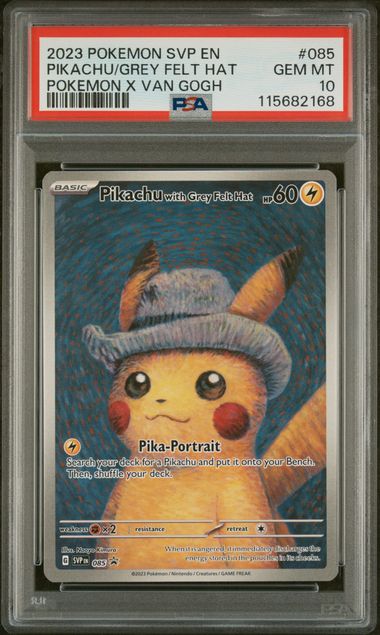
Pikachu with Grey Felt Hat PSA 10
The Pikachu with Grey Felt Hat PSA 10 is one of the best-known promotional cards from recent years. Thanks to the collaboration between Pokémon and the Van Gogh Museum, this card became a modern classic. Due to its popularity and excellent condition, many collectors choose a PSA 10 copy.
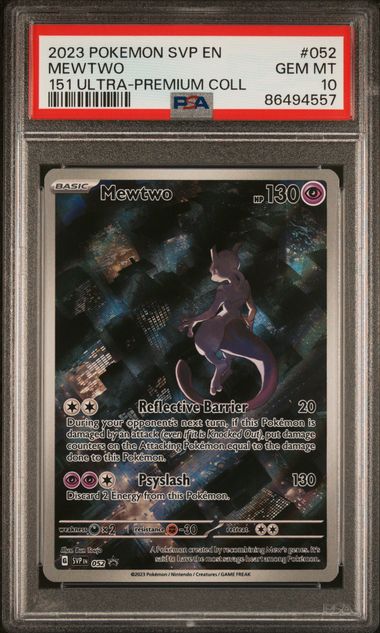
Mewtwo SVP 052 PSA 10
The Mewtwo SVP 052 PSA 10 from the Pokémon 151 Ultra Premium Collection is another good example of a modern card that is often graded professionally. The combination of a popular Pokémon and an exclusive promo makes this card attractive to collectors.
Rayquaza PSA 10
Rayquaza has been one of the most popular Legendary Pokémon in the hobby for years. This Rayquaza PSA 10 shows why collectors often strive for the highest possible grade for iconic Pokémon.

Frequently Asked Questions
Should every rare Pokémon card be graded?
No. Condition remains at least as important as rarity. A damaged rare card will usually not receive a high grade.
Is a PSA 9 also good?
Absolutely. Many PSA 9 cards are still in excellent condition and are popular among collectors.
Can a modern Pokémon card be worth grading?
Yes. Popular Illustration Rares, Special Illustration Rares, Full Arts, and promotional cards are graded much more often nowadays.
View graded Pokémon cards
Curious about what professionally graded Pokémon cards look like? Then check out our current graded Pokémon cards collection. Here you will find PSA and Beckett slabs of popular Pokémon from both modern and vintage expansions.
Are you unsure whether your card is worth grading?
Grading is especially interesting when a card is rare, in excellent condition, or has special significance within your collection. By looking critically at the condition beforehand, you increase the chance of a high grade.
Curious about what professionally graded Pokémon cards look like? Then check out our graded Pokémon cards collection or read our comprehensive guide on graded Pokémon cards for more information about the grading process.

